



Bathroom Extractor Fan Cleaning: Safe UK Care Checklist
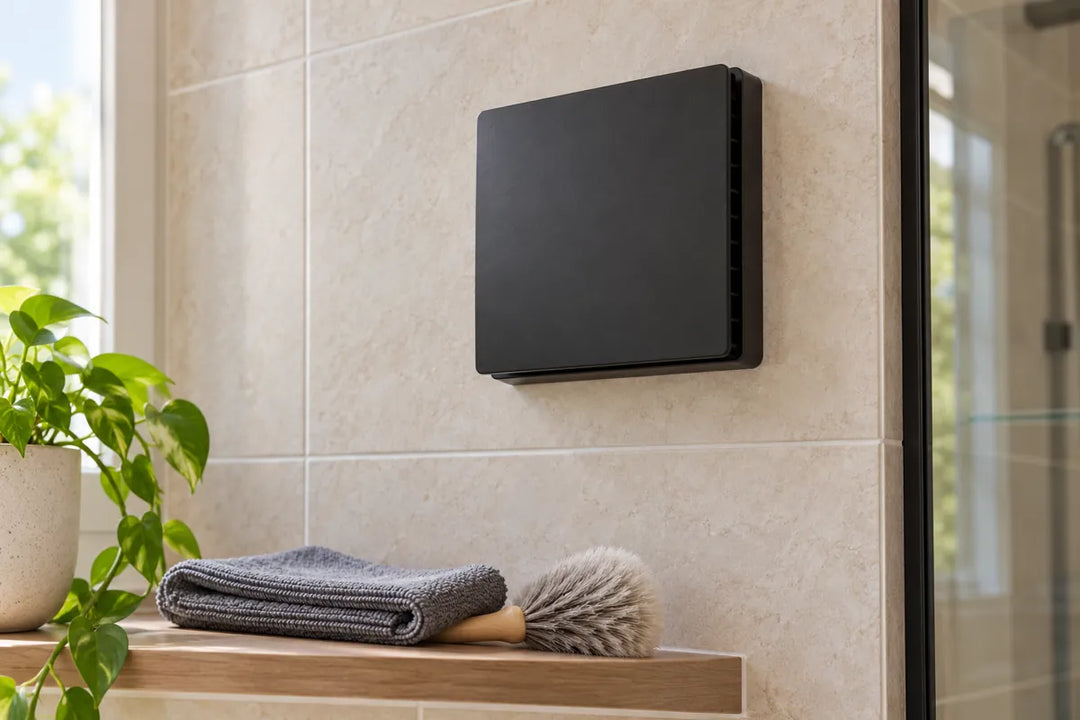
Illustrative image; use the selected model’s specification and instructions.
Quick answer
Keep your bathroom extractor fan’s intake free of dust using only the cleaning method permitted by its instructions. Isolate the electrical supply before cleaning; switching the bathroom light off may leave timer and humidity-sensor fans powered. Do not open electrical compartments or remove a cover unless the manufacturer explicitly permits that user-maintenance step.
Why a dusty fan needs attention
An extractor fan works with the rest of the ventilation route to carry moist air out of the bathroom. Dust and fluff can obstruct its intake. A fan that still makes a noise is not necessarily moving enough air, so cleaning and inspection should not be postponed until it stops completely.
The government’s existing-home ventilation guide for England recommends regular extractor-fan cleaning and following manufacturer instructions. This article is a homeowner care checklist, not a set of electrical repair instructions.
Before cleaning: identify the model and isolation
- Find the product instructions. Identify the actual model from your purchase record or other safely accessible information. A similar-looking fan may have different cover fixings and cleaning restrictions.
- Check what you may clean. Confirm which surfaces are user-accessible and which cleaning materials are permitted. If the instructions are missing, ask the supplier before dismantling anything.
- Isolate the supply as instructed. A timer or humidity sensor can operate independently of the light switch. If you cannot identify or safely operate the isolation, leave the job to an electrician.
- Plan safe access. Do not stand on a bath edge or reach across a wet shower area. Arrange suitable help for a high wall or ceiling fan.
Keep your hands, floor and cleaning equipment dry around the unit. Do not insert fingers, brushes or vacuum attachments through a grille or intake gap. This guide does not authorise removing blades, disconnecting wires or adjusting components inside the enclosure.
Clean the accessible exterior gently
With the supply isolated, use the manufacturer-approved method on the accessible outer fascia and intake surfaces. Where dry external dusting is permitted, a soft cloth can lift loose surface dust without pressing it into the opening. Stop if safe access requires disassembly that the user instructions do not explain.
Do not spray cleaner or water onto the fan, soak the assembled unit or use abrasive products. If a removable fascia has a specific washing procedure, follow that procedure and its drying and refitting instructions; do not apply advice for another model. Keep the supply isolated until everything is correctly refitted and ready for use.
A matte black finish does not call for a special universal chemical. Likewise, a white cover’s appearance is not a reliable indicator of whether the concealed ventilation route is clear. Use the approved care method rather than trying stronger products to make a discoloured cover look new.
When cleaning is not enough
Stop using the fan and arrange an electrician’s assessment if there is a burning smell, visible damage, unusual buzzing or crackling, or repeated electrical tripping. Do not repeatedly restart it to see whether the problem disappears.
If it runs but moisture still lingers, ask for the duct route, outlet, controls and replacement-air provision to be checked. Cleaning an intake cannot correct every ventilation problem. Our bathroom fan ducting guide explains why the whole route matters.
A fan that continues after the light goes out may simply be following its timer or humidity control. Read humidity-sensor versus timer fan operation before assuming an extended run is a fault. Electrical fault investigation belongs with an electrician.
Keep a simple care record
There is no single cleaning interval suitable for every model and bathroom. Follow the supplied schedule and inspect the accessible exterior between cleaning visits. Record the date, what was cleaned, and any change in noise or moisture clearance. A photo taken from a safe position can help you compare visible dust build-up.
If you rent, report a faulty or ineffective fan through the landlord’s repair process; do not dismantle it. Government guidance on damp and mould highlights professional ventilation inspection and maintenance. Persistent damp also needs its cause assessed, rather than being attributed automatically to cleaning habits.
Choosing a replacement and related care
Our current bathroom extractor fan range includes 4-inch black and white options and a 6-inch black model. The visible cover dimensions are not the duct diameter. Match the specific fan, controls and installation requirements with your electrician before ordering a replacement.
If the fan runs but towels remain damp, also read why towels can stay damp on a warm towel rail. Heating, towel arrangement and moisture removal need to work together.
What to keep with your fan instructions
Keep the purchase record, exact model, installer handover, permitted exterior-cleaning method and any maintenance schedule together. For the 6-inch matte black WW-150QTH fan, the humidistat and timer explain why switching off the bathroom light may not remove power. Isolation and access must follow the supplied instructions.
A photograph of the visible fascia is useful for a care record, but does not identify hidden wiring or establish a replacement’s fit. If a replacement is needed, return to the fan buying guide and the 150mm size checks before ordering. Use the route assessment when a clean fan still fails to clear moisture; repeated condensation is not automatically a cleaning failure.
Common cleaning questions
Can I clean a fan with the light switched off?
Do not assume the light switch isolates it. Follow the unit’s electrical-isolation instructions before cleaning.
Should I remove a flat front panel?
Only if the actual model’s user instructions permit that maintenance step and explain safe removal and refitting. Otherwise keep it assembled and ask for help.
Does cleaning mean I need a new fan?
No. Routine surface care and replacement are different decisions. Damage, electrical faults or ineffective extraction need an appropriate assessment first.
Related planning guide
Read the main guide and the bathroom moisture assessment guide.

About the Author
Huseyin Aras is a Bathroom Heating & Product Sourcing Specialist at Coventry Towel Radiator with over 18 years of experience in towel radiators, bathroom heating systems, supplier sourcing, and modern home comfort solutions.
About Huseyin and his guides