


How to Fix Bathroom Moisture in UK Homes: The Complete Guide to Preventing Condensation, Damp & Mould (2026)
Quick answer
Control bathroom moisture with effective extraction, airflow and regular drying of wet surfaces. Heating can help reduce cold surfaces and dry towels, but a towel radiator cannot replace ventilation or repair the cause of a leak.
How to Fix Bathroom Moisture in UK Homes: The Complete Guide to Preventing Condensation, Damp & Mould (2026)
Bathroom moisture is one of the most common causes of condensation, damp and mould in UK homes. If your mirrors stay steamed up after a shower, water collects on your windows, or you've started noticing black mould around ceilings, grout or silicone, excess humidity is almost always the underlying cause.
The good news is that most bathroom condensation problems can be prevented. With the right ventilation, a correctly sized extractor fan, and a few simple daily habits, you can significantly reduce moisture before it causes long-term damage.
At Coventry Towel Radiator Shop, we regularly help homeowners improve their bathrooms by choosing heating and ventilation products that work together to create a warmer, drier environment. While every property is different, we've seen how improving airflow and controlling humidity can help reduce condensation and protect everything from painted walls to heated towel radiators.
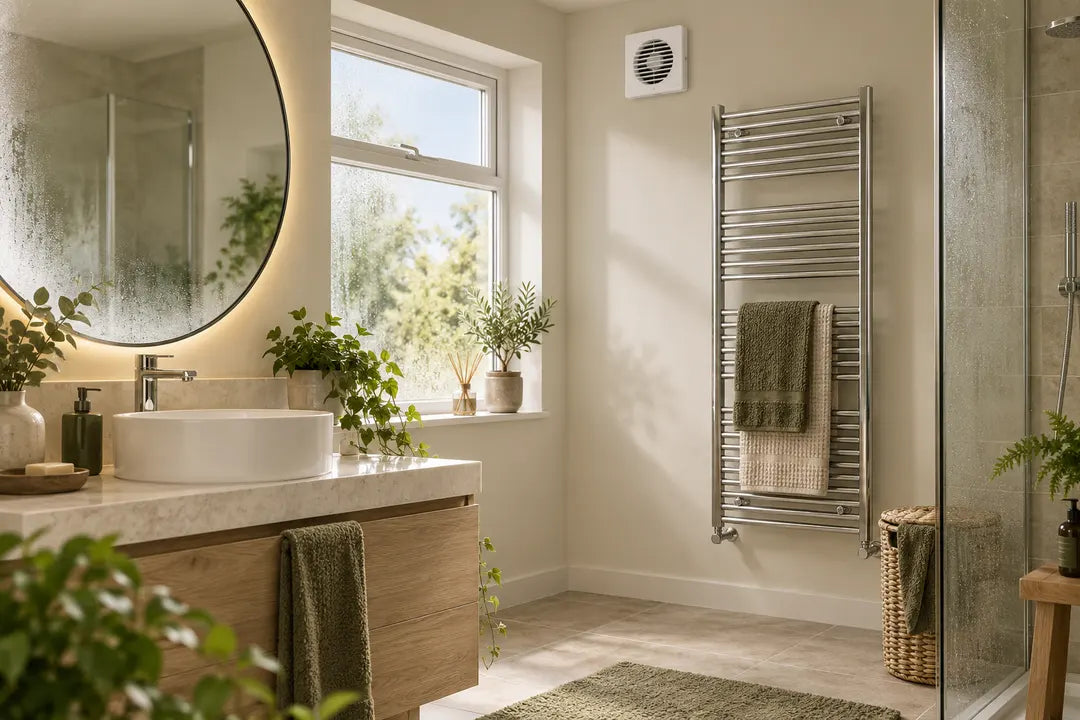
While ventilation removes humid air, quality heated towel radiators help warm the room more evenly and dry towels faster, creating conditions where condensation is less likely to linger.
This guide explains:
- Why bathrooms become so humid
- Why condensation is worse in many UK homes
- How moisture damages your bathroom over time
- The best ways to reduce condensation
- How to choose the right extractor fan
- Whether a heated towel radiator can help control moisture
- Common mistakes that make condensation worse
Whether you're renovating your bathroom, replacing an extractor fan or simply trying to stop mould returning every winter, this guide will help you understand what causes the problem and how to solve it.
The most effective way to reduce bathroom condensation is to remove humid air before it settles on cold surfaces.
For most homes, this means:
- Running an extractor fan during and for at least 15–20 minutes after showering
- Using a fan that's correctly sized for your bathroom
- Opening a window whenever practical
- Keeping indoor humidity between 40% and 60% relative humidity (RH) where possible
- Wiping excess water from shower screens and tiles
- Keeping ventilation grilles and ducting clean
If condensation continues despite these measures, your existing extractor fan may not provide enough airflow for the size of your bathroom.
Every time you shower, bathe or run hot water, warm air absorbs moisture and fills the room with water vapour.
A typical shower can release around 1 to 2 litres of water vapour into the air, depending on its length and temperature. Without adequate ventilation, this warm, moisture-laden air has nowhere to escape.
When humid air comes into contact with colder surfaces such as:
- Windows
- Mirrors
- External walls
- Ceiling corners
- Tiles
- Metal fixtures
it cools rapidly and turns back into liquid water.
This process is called condensation.
Condensation itself isn't usually the problem—it's the amount of time moisture remains on surfaces. If humidity stays high for long periods, damp conditions allow mould spores to grow and gradually damage your bathroom.
Bathrooms in the UK face unique challenges compared with many warmer countries.
During autumn and winter, the temperature difference between warm indoor air and cold external walls or windows becomes much greater. The warmer the moist air and the colder the surface, the more condensation forms.
Many UK properties also have bathrooms that are:
- Internal rooms with no opening window
- Connected to long duct runs
- Located in loft conversions
- Used by several family members every day
- Fitted with older or undersized extractor fans
- Poorly insulated
These factors mean moisture often remains trapped inside the room long after showering has finished.
Modern homes can also experience condensation because they're built to be more airtight. While this improves energy efficiency, it makes effective mechanical ventilation even more important.
Many homeowners think condensation is simply an inconvenience because it leaves mirrors steamed up after a shower.
In reality, persistent humidity can gradually affect almost every part of your bathroom.
Excess moisture may contribute to:
- Black mould growth
- Damp patches on walls and ceilings
- Peeling paint and wallpaper
- Stained grout and silicone
- Musty odours
- Swollen wooden furniture
- Damage to plasterboard
- Corrosion on exposed metal fittings
- Reduced indoor air quality
Over time, these problems can become increasingly expensive to repair.
The UK Health Security Agency also advises that persistent damp and mould can affect indoor air quality and may increase the risk of respiratory problems, particularly for children, older adults and people with asthma or weakened immune systems.
Preventing moisture isn't just about protecting your bathroom—it's also about creating a healthier living environment.
One question we're often asked is whether condensation can damage heated towel radiators.
The answer is yes—but with some important context.
A quality heated towel radiator is designed for use in humid bathrooms. However, if moisture remains trapped in the room day after day, particularly where finishes have already been scratched or damaged, prolonged exposure to damp conditions may increase the likelihood of:
- Surface corrosion
- Rust developing on damaged coatings
- Staining around joints
- Premature wear of decorative finishes
The radiator itself isn't usually the cause of corrosion—poor ventilation is.
Keeping humidity under control helps protect not only heated towel radiators, but also:
- Towel rails
- Shower fittings
- Taps
- Mirrors
- Bathroom cabinets
- Decorative accessories
Good ventilation works alongside your heating system to create a drier environment that supports the long-term appearance of your bathroom.
Expert Tip: Warm bathrooms dry more quickly than cold ones, but heating alone won't remove moisture. The most effective solution combines adequate heating with properly sized mechanical ventilation.
When discussing condensation, you'll often see references to Relative Humidity (RH).
Relative humidity measures how much moisture is present in the air compared with the maximum amount it could hold at the same temperature.
As a general guide:
| Relative Humidity | What It Means |
|---|---|
| Below 40% | Air may feel dry |
| 40–60% | Ideal range for most homes |
| Above 60% | Condensation becomes more likely |
| Above 70% | Increased risk of mould growth if sustained |
Bathrooms naturally exceed these levels while showering, but a good extractor fan should return humidity to normal shortly afterwards.
If you're unsure which fan is right for your bathroom, read our comprehensive Definitive Guide to Choosing a 6-Inch (150mm) Bathroom Extractor Fan. It explains airflow requirements, humidity sensors, run-on timers, duct lengths and how to select the right fan for your bathroom.
If you're planning a complete bathroom upgrade, these guides may also help:

About the Author
Huseyin Aras is a Bathroom Heating & Product Sourcing Specialist at Coventry Towel Radiator with over 18 years of experience in towel radiators, bathroom heating systems, supplier sourcing, and modern home comfort solutions.
About Huseyin and his guides