

Replacing Towel Radiator Valves: A UK Pre-Order Checklist
Quick answer
Before replacing towel radiator valves, identify the existing valve pattern, pipe outside diameter and material, radiator-side thread, tails and available fitting space. Matching colour and nominal pipe size does not guarantee a direct swap. Agree the replacement and system work with a competent installer before loosening any connection.

A replacement pair is easiest to choose when the existing installation is recorded accurately. This checklist covers the buying and planning stage. It is not a universal drain-down or fitting procedure: the safe method depends on the heating system and the exact products.
For a wider comparison of shapes, pipe sizes and controls, start with our towel radiator valve buying guide.
Establish why the valves are being changed
Replacing sound valves for a different finish is a different decision from investigating a leak or a rail that will not heat properly. A leak may come from a joint, tail, valve body or another part of the installation. Poor heating may involve air, balancing, controls or circulation rather than the visible valve.
Ask the installer to identify the cause before ordering a replacement as a remedy. New valves will not repair damaged pipework or resolve an unrelated system fault.
Record the existing arrangement
- Radiator: make, model, heating type and available drawing.
- Valve body: angled or straight pattern, visible markings and control type.
- Pipework: outside diameter, material, markings and direction of approach.
- Connections: radiator thread and existing tail arrangement, confirmed from specifications.
- Space: pipe centres, distance from the wall and access beside the valve.
Photograph the whole installation, then each connection from the side and front. Keep the pipe, valve and radiator port in the same photograph where possible. Do not dismantle a fitting simply to identify it.
Why the same pipe size may not mean a direct replacement
Two valves intended for the same nominal pipe size can have different body lengths, tail arrangements and clearances. The radiator port thread is separate from the pipe connection. A nut that appears to screw onto another fitting is not evidence that the joint is correct.
Have the installer decide whether existing tails, nuts or olives may be retained. Do not mix old and new parts merely because they look similar. Use the combination permitted by the replacement valve manufacturer, and replace unsuitable or damaged components.
If pipework is staying in place, compare the full assembled dimensions before assuming the new valves will reach. Our pipe-centres measuring guide explains what to record.
Check reducers and plastic pipe separately
A valve with a 15mm compression connection may have an approved arrangement for smaller pipe, but the reducer must suit the exact valve and pipe. Do not identify pipe size from the outside of a compression nut.
For plastic pipe, give the installer the pipe-system name and markings. The pipe manufacturer may specify support inserts and may prohibit particular reducing sets. Neither a familiar brand nor the presence of an insert makes every combination acceptable. Check the reducer compatibility guide before shortlisting parts.
Keep the control arrangement in view
Changing a manual pair to a thermostatic arrangement can involve more than replacing visible bodies. The new controls must work with the rest of the heating system. Ask who will set and check the balancing, whether the sensor has suitable exposure to room air, and how the towel rail is intended to operate.
For dual-fuel rails, agree how the water and electric modes will be used under the radiator and element instructions. Do not assume that closing both valves is the correct summer arrangement. A sealed electric-only rail is outside the scope of a central-heating valve replacement.
Agree the work before installation day
The installer should determine the isolation or draining method and confirm the system is safe to work on. Hot water and residual pressure can remain when the heating is switched off. Do not loosen a connection on that basis alone.
Include access, protection for nearby finishes, replacement fittings and any necessary pipe alterations in the plan. After fitting, the installer should carry out the checks required by the valve and heating-system instructions, including leakage checks and appropriate pressure, venting and control checks. If system water has been lost, ask whether water treatment needs checking too.
Choose the replacement only after the fit is confirmed
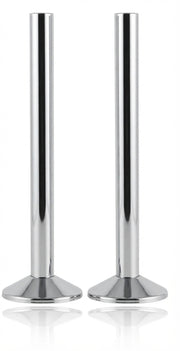
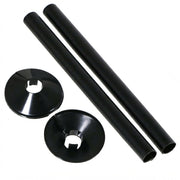
Our black manual valve pairs and chrome manual valve pairs offer angled and straight options. The 8mm and 10mm packages include matching reducers; the 15mm packages do not include reducing adaptors. These are manual pairs, not thermostatic valves.
Check the selected variant and current product information, then confirm the entire connection arrangement with the installer. If you need help identifying a product specification, contact our Coventry team with the measurements and model details.