

Radiator Dosing Funnel and Inhibitor Planning: UK Guide
Quick answer
A radiator dosing funnel transfers a compatible liquid treatment through a suitable filling point. It does not choose the treatment, determine the dose or make a pressurised system safe to open. Confirm the chemical instructions, system arrangement and tool compatibility before use.
What the tool does
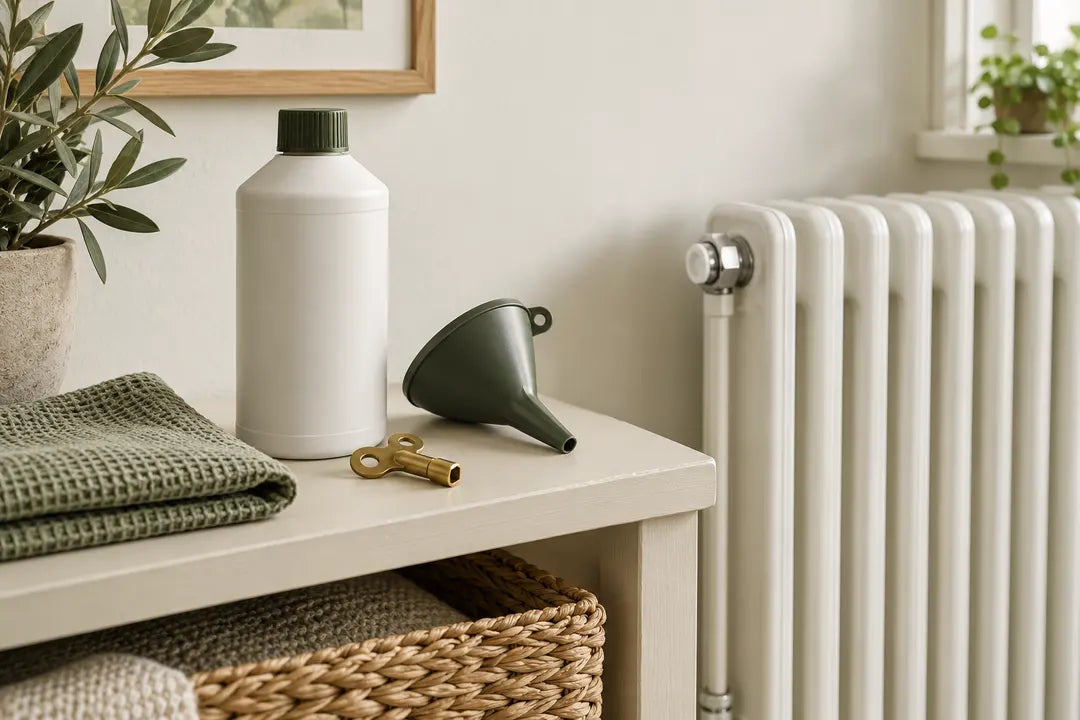
A gravity-fed funnel and a purpose-made injection system work differently. A funnel needs the appropriate unpressurised filling arrangement and enough space for the added liquid. A compatible injector may use a different access point and procedure.
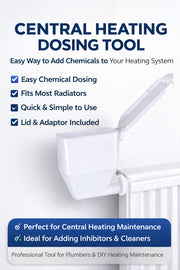
Our central heating dosing-tool listing identifies the tool we sell. Confirm the actual connection, chemical compatibility and operating instructions before ordering. A product photograph or the word “adaptor” is not proof of a particular pressure rating or universal fit.
Five treatment and tool decisions
Understand inhibitorSeparate corrosion protection from cleaning.Read what inhibitor does →Check when to re-doseUse concentration checks and service records.Read the maintenance guide →Assess cleaning firstChoose a cleaning method from the system condition.Read the flushing checks →Compare funnel and injectorCheck the product, access point and procedure.Compare dosing methods →Check the no-full-drain optionConfirm isolation, pressure and liquid displacement.Read the system checks →
Start with the question you need to answer
For protection, read what inhibitor does. If the question is whether more treatment is needed, use the checking and re-dosing guide. A cold radiator or recurring pressure loss needs assessment of the symptom; it is not a concentration reading.
If work has already been carried out, the post-treatment checks separate air release, leaks and pressure from confirming the treatment level. Keeping these decisions separate helps avoid buying a tool or adding another bottle before knowing what the system requires.
A practical planning sequence
- Identify the system type, materials and existing treatment.
- Confirm the appropriate product, required dose and application procedure with the treatment instructions and system requirements.
- Select a compatible access point and tool.
- Have the competent person establish cooling, isolation, depressurisation and any draining or liquid displacement needed.
- Apply and circulate the product using its instructions, then restore the assembly and carry out the required checks.
- Record the product, quantity, date and appropriate test result.
Do not remove a vent or plug from a hot or pressurised radiator to attach a funnel. Choosing an upstairs radiator does not remove the need for system assessment.
Dose and verification
Concentrations and pack coverage differ between products. A generic 500ml recommendation is not suitable for every chemical or system volume. Follow the actual label and technical instructions, then use the specified test where required.
For checks after treatment, read air and pressure checks after inhibitor work. For symptoms that may need diagnosis, use the system-water assessment checklist.
Prepare a short handover for your heating professional
| Question | Useful information |
|---|---|
| System | Identify the boiler and heating arrangement, with its instructions where available. |
| Previous treatment | Provide the product name, date and amount recorded after the last work. |
| Recent changes | Note replacement components, draining, refilling or repeated water loss. |
| Proposed equipment | Provide the exact tool and chemical details, not just a photograph of a fitting. |
| Completion record | Ask for the final treatment check, work record and next review date. |
If the previous chemical is unknown, make that clear rather than guessing which product to mix with it. Ask what identification, testing or preparation is needed before any additional treatment.
Which systems does this cover?
This guide concerns compatible water-filled central-heating systems. It is not an instruction to add chemicals to a sealed electric towel rail, drinking-water circuit or unfamiliar combined arrangement. Obtain specific instructions where compatibility is uncertain.
Browse radiator accessories after confirming the required equipment. For ordinary finish cleaning, use the towel radiator care guide.
Frequently asked questions
Does a dosing funnel include the inhibitor?
Do not assume it does. Check the current package contents. The tool and the selected chemical have separate compatibility and application requirements.
Can I use one standard dose in every heating system?
No. Use the actual treatment instructions, system requirements and appropriate verification. Pack size alone does not establish the correct quantity.
Does having a threaded adaptor make a funnel safe for a pressurised radiator?
No. A thread does not establish pressure capability or safe access. The system and tool instructions determine the permitted arrangement.
Can inhibitor replace cleaning or repair work?
No. Protective treatment does not establish that deposits have been removed or that a leak or circulation fault has been repaired.
What if the existing chemical treatment is unknown?
Check the commissioning or service record and tell the heating professional what is missing. Do not identify the treatment by water colour or add another product until compatibility and any required preparation have been established.
What should be checked after the treatment is added?
Follow the actual product and system instructions for circulation and restoring normal operation. Keep separate records of the treatment quantity and any concentration test, with relevant leak, air and cold-pressure checks. A warm radiator alone does not confirm the treatment level.

About the Author
Huseyin Aras is a Bathroom Heating & Product Sourcing Specialist at Coventry Towel Radiator with over 18 years of experience in towel radiators, bathroom heating systems, supplier sourcing, and modern home comfort solutions.
About Huseyin and his guides